Revitalize Your Workday with Quick Standing Stretches

Take a refreshing pause that actually restores you. Today we focus on Office Break Routines: Standing Stretches and Mobility Sequences, blending quick movements with mindful breath so you can reduce stiffness, sharpen focus, and return energized. The routines are office-friendly, discreet, equipment-free, and adaptable to your schedule, space, clothing, and comfort.

Why Micro-Moves Matter

Short, frequent movement breaks change how your body feels at the desk and how your brain works under pressure. Light standing stretches stimulate circulation, reduce muscle guarding, and calm the nervous system, helping ideas flow. I discovered this while preparing quarterly reports; three tiny breaks saved my shoulders and my deadline.

Circulation and Posture Reset

Standing up for sixty seconds, planting your feet hip-width, and stacking ears over shoulders resets posture without drama. Gently draw shoulder blades down, lengthen the back of your neck, and soften ribs. This relieves computer hunch, refreshes circulation to fatigued muscles, and builds awareness you can carry into typing.

Focus, Mood, and Energy

Brief, intentional movement interrupts stress loops, nudges dopamine and norepinephrine, and steadies mood without another espresso. Try inhaling during the reach and exhaling during the release. That rhythmic pairing quiets mental noise, creating a pocket of clarity where priorities feel obvious and meetings feel easier to navigate.

Preventing Desk-Related Aches

Most desk discomfort accumulates quietly from static postures. Gentle standing sequences mobilize hips, extend thoracic spine, and wake sleepy glutes, decreasing strain on the lower back and neck. This isn’t a workout; it is savvy maintenance that prevents flare-ups and supports comfortable productivity through crunch times.

Two-Minute Standing Flow for Busy Desks
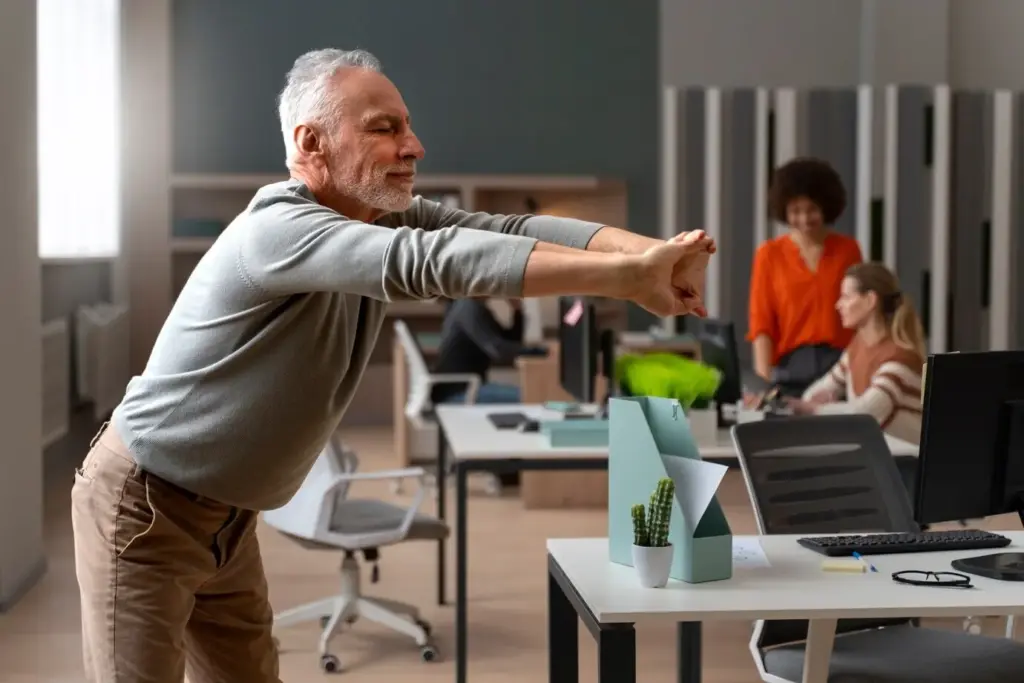
Pressed for time? This compact flow respects busy schedules and shared spaces. You can complete it near your chair without sweating, shoes change, or judgmental glances. It layers simple moves for the neck, shoulders, spine, hips, and calves, leaving you refreshed before the next call begins.

Neck and Shoulder Unwind

Stand tall, unlock knees, and let your chin nod slowly as if tracing a tiny arc. Float one ear toward the same-side shoulder, pause, then switch. Add gentle shoulder rolls forward and back. Keep breath smooth. Notice warmth spreading as tight fascia yields without forceful pulling.

Thoracic Opener with Supported Reach

Place fingertips lightly on the desk for balance. Inhale, sweep one arm forward and slightly overhead, opening through the chest while your eyes follow the hand. Exhale, return and switch sides. Think length and ease, not range. Each repetition lubricates mid-back joints fatigued by sitting.

Calf, Hamstring, and Hip Wake-Up

Step one foot back, heel heavy, toes forward. Bend the front knee and feel a calf stretch behind. Hinge gently at the hips, tipping torso forward to invite hamstrings. Add miniature hip circles. Breathe steadily. Switch legs. Notice circulation return to feet that felt numb earlier.

Five-Minute Mobility Ladder

Ankles to Knees

Rock gently through ankles, tracing circles in both directions while maintaining a soft knee bend. Progress to knee bends with heels glued to the floor, feeling quads wake up. Finish with knee hugs, balancing lightly as you draw one thigh up, teaching stabilizers to cooperate under gentle load.

Hips and Pelvis

Place hands on hips and explore controlled tilts, small circles, and lateral shifts, as if polishing an invisible table with your belt buckle. Keep ribs quiet and glutes responsive. These motions hydrate hip capsules, reduce stiffness from prolonged sitting, and prepare you for comfortable standing or walking bursts.

Spine and Breath

Interlace fingers, reach forward, then up, lengthening from tailbone through crown as you inhale broadly into your sides. Exhale and gently twist right, then left, keeping hips square. Finish with a slow forward fold. Breath-led sequencing nourishes discs and restores elastic recoil across the thoracic spine.

Ergonomic Tweaks That Multiply Results

Smart setup reduces how often you need to rescue your body with movement, while still inviting it regularly. Small changes to screen height, chair support, and reach zones make every stretch more effective. Think environment as silent teammate, reminding you to stand, glide, and breathe.

Make It Social Without Awkwardness

Schedule a recurring two-minute stand-up before weekly planning. Keep the script predictable: neck nods, shoulder rolls, supported reaches. Rotate a playful prompt like naming a song you loved in high school. That consistent ritual removes awkwardness and makes participation easy, even for introverts protecting precious focus.
Offer choices: standing versions, seated alternatives, or simply breathing with cameras off. Avoid commentary on bodies or flexibility. Focus on sensations and kindness. Clear boundaries make people feel safe, which paradoxically invites more curious exploration, sustained engagement, and long-term habit formation across diverse roles and schedules.
For distributed teams, open a five-minute window after long calls where people can mute, stand, and follow a shared flow. Provide a simple slide deck with cues. Everyone returns aligned, chat warms naturally, and the next agenda item lands with less friction and scattered energy.

Listen to Your Body, Adapt the Sequence

Your body’s signals are trustworthy teachers. Some days want gentler arcs; others welcome deeper ranges. Respect previous injuries, morning stiffness, and afternoon fatigue. Adjust tempo, angles, and support tools. Document what helps, invite professional advice when needed, and treat progress like tending a friendly houseplant.

Keep the Momentum: Share, Save, and Subscribe

Habits love community. Drop a quick note about which standing stretches felt best, bookmark this page, and share it with teammates who need relief today. Your feedback shapes future sequences and stories, and your subscription ensures new routines arrive exactly when motivation starts dipping.
Zerasiravarotelivexonari
Privacy Overview

This website uses cookies so that we can provide you with the best user experience possible. Cookie information is stored in your browser and performs functions such as recognising you when you return to our website and helping our team to understand which sections of the website you find most interesting and useful.